
Loading Safari Bandara
Safari BandaraSafari BandaraWasgamuwa · Sri Lanka
Uva Province · Sri Lanka

Dambana

The last stronghold of Sri Lanka's indigenous Vedda people — forest hunters, honey-gatherers and keepers of a language and a way of life that predates the island's written history.

Read Their Story
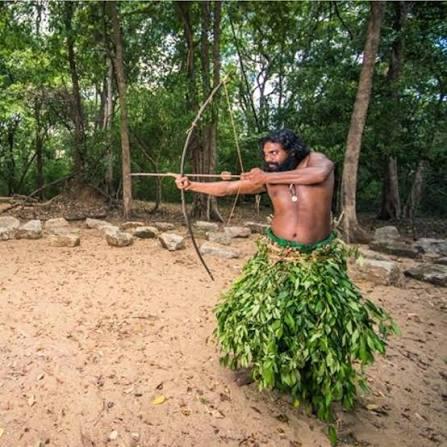
A Vedda elder draws a traditional bow in the forest near Dambana, Sri Lanka

48,000years

Ancestry traced to Balangoda Man

~1,000residents

Vedda families, as of the last count

20km

From Mahiyanganaya town

Endangered

Status of the Vedda language

Where They Come From

Sri Lanka's First People

48,000–3,800 years ago

Balangoda Man

Archaeologists trace Vedda ancestry to Balangoda Man, among the earliest known inhabitants of Sri Lanka — a hunter-gatherer lineage that predates the island's Sinhalese and Tamil settlement by tens of thousands of years.

Centuries of forest life

Hunters of the Dry Zone

Long before Dambana had a name on any map, Vedda families lived by bow, axe and cave shelter through the dry-zone forests stretching toward what is now the Maduru Oya reserve — moving with the seasons, not settling them.

Today

Dambana

Around a thousand people, all of Vedda descent, now live in and around Dambana under Chief Uruwarige Wannila Aththo — holding onto a language, a set of rituals, and a forest knowledge that has nearly vanished everywhere else on the island.
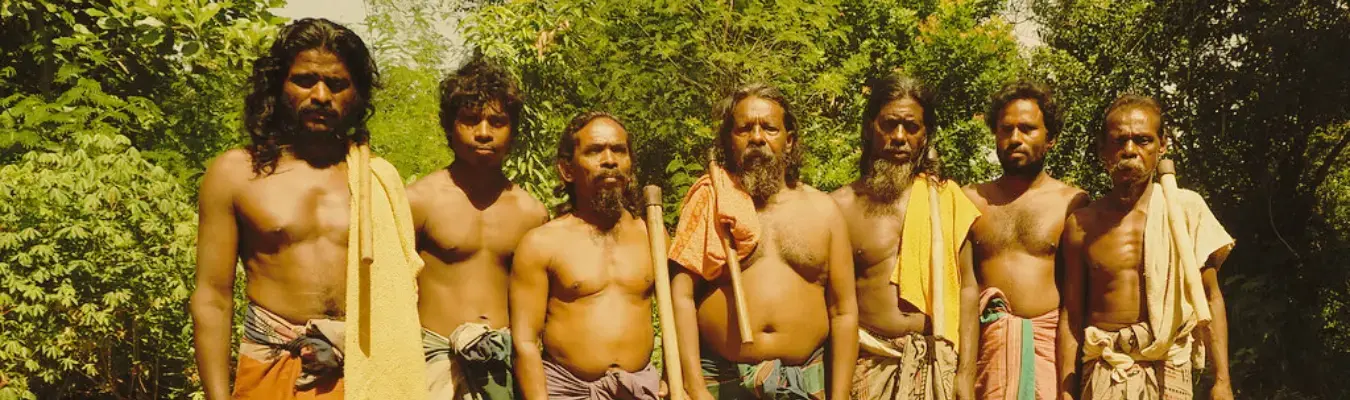
A group of Vedda men from the Dambana community standing together in the forest
Still Practiced

Living Traditions

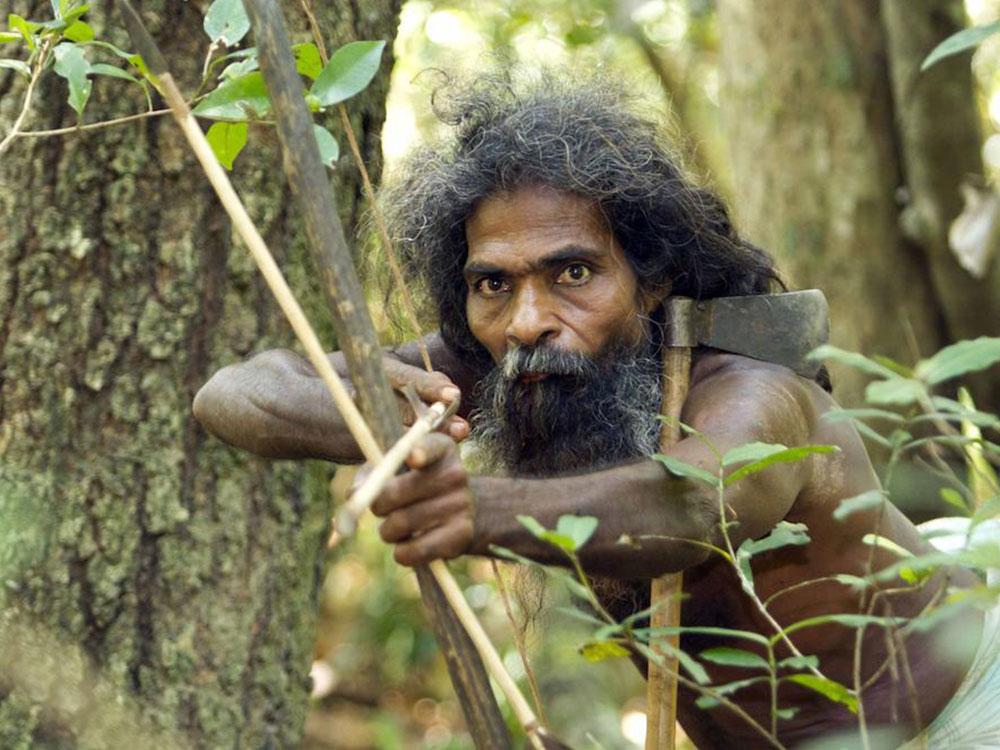
A Vedda man in traditional leaf attire draws a hunting bow near Dambana, Sri Lanka
01

Hunting & Honey

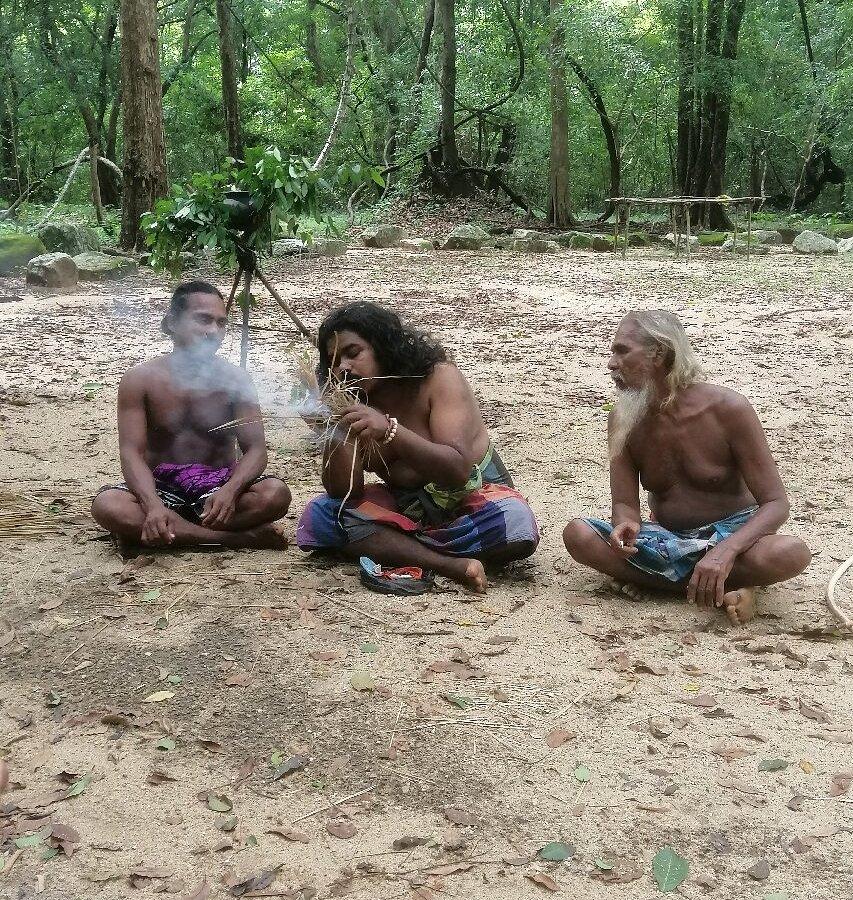
The bow and the kaduwa — a short hunting axe — are still carried, not just shown. Honey gathering follows its own ritual: climbing high into the forest canopy and using smoke, not force, to work around the bees rather than fight them.

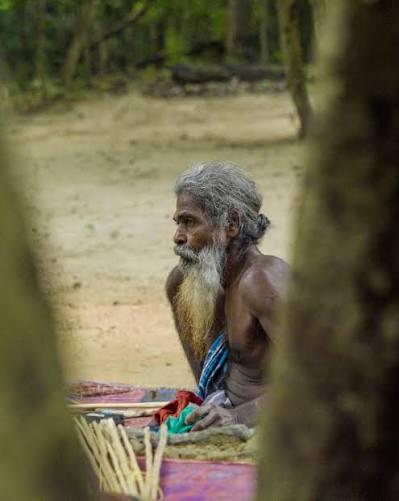
A Vedda elder sits in the forest, framed between tree trunks, near Dambana, Sri Lanka
02

A Language Nearly Gone

Vedda is classified as endangered — a tongue rooted in archaic Sinhala but carrying words and structures found nowhere else. What survives of it survives largely here, spoken between generations in Dambana.

Three Vedda men start a fire using traditional methods near Dambana, Sri Lanka
03

Kiri Koraha

The Kiri Koraha is a ritual dance performed to call on the Nae Yaku — ancestral spirits — for blessing and guidance. It's still performed for the community itself, not staged purely for visitors.

The Community

Faces of Dambana

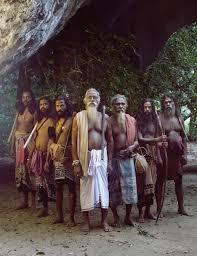
A group of Vedda elders standing at a cave entrance near Dambana, Sri Lanka
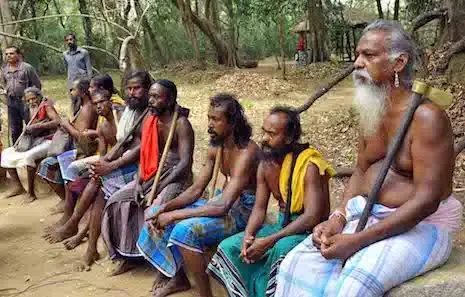
Vedda community elders seated together near Dambana, Sri Lanka, with their chief on the right
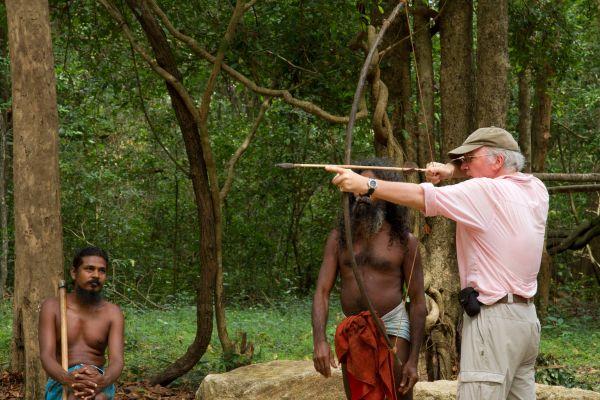
A visitor tries traditional archery with Vedda guides near Dambana, Sri Lanka
Before You Go

Visiting Dambana

Dambana borders the Maduru Oya reserve, close to Mahiyanganaya — near enough to Wasgamuwa that the two make an easy pairing.

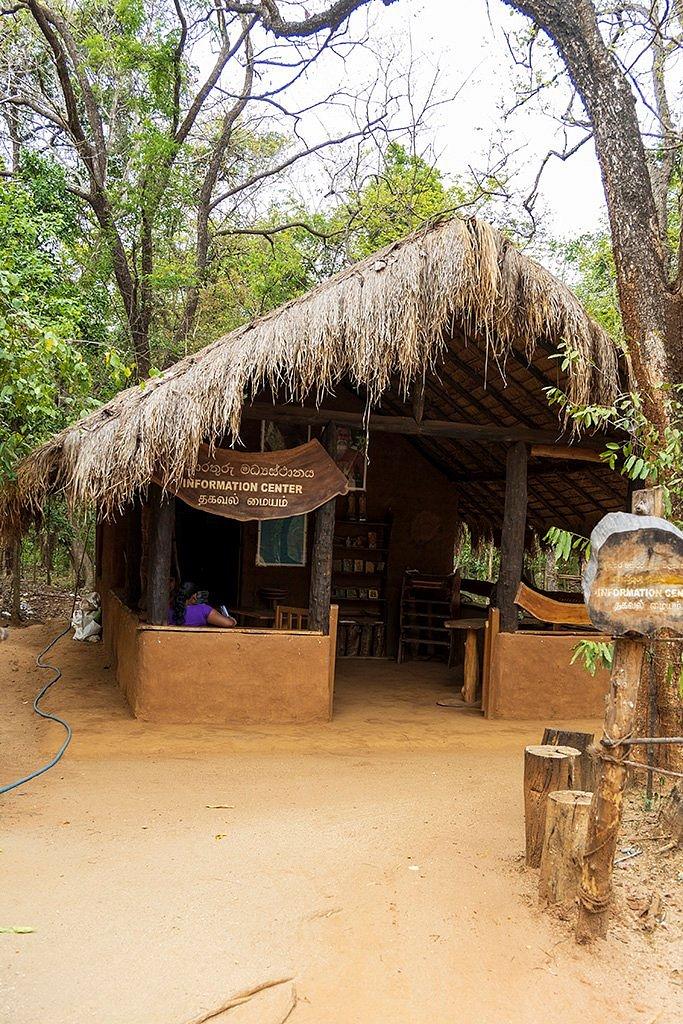
The information centre at the entrance to Dambana Vedda village, Sri Lanka
01

Do I need permission to visit?

Yes, in spirit if not always in paperwork — visits are arranged through a guide or directly with the village, and it's the chief's welcome that opens the door, not a ticket counter.

02

What does a visit actually involve?

A guided walk through the forest homestead, with demonstrations of bow-hunting, fire-starting by friction, and honey collection — plus time at the village's small information centre and heritage museum.

03

How should I behave while I'm there?

Dress modestly, ask before photographing anyone, and keep in mind this is a living community going about a version of daily life — not a re-enactment staged for cameras.

04

Can this be combined with a Wasgamuwa trip?

Easily. Dambana sits near Mahiyanganaya, on the same side of the country as Wasgamuwa, so it pairs naturally with a safari via Hasalaka rather than requiring a separate trip.

Add Dambana to a Wasgamuwa Safari

Bandara can build a trip that pairs a safari with a visit to Dambana — two very different sides of Sri Lanka's interior, a short drive apart.

Plan Your Trip
Book via WhatsApp